The 2005 Celebrating Knowledge NLB Conference
This was the official website for the 2005 Celebrating Knowledge NLB Conference, held in Singapore.
National Library Board, Singaporeorganised a 2-day Conference on 14-15 November 2005 in conjunction with the official opening of the new National Library at Victoria Street, Singapore. This Conference provided a platform for information and knowledge professionals, librarians, academics and consultants to exchange views and ideas on the future and the impact of new digital technology on the library and learning. As a prelude, a Welcome Gala Dinner was held on 13 November 2005 to promote networking opportunities.
Content is from the site's 2005 archived pages.

WELCOME MESSAGE
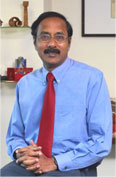
It gives me great pleasure to invite you to join us in Celebrating Knowledge, an NLB Conference which will be held as part of a series of programmes to mark the official opening of the National Library.
The opening of the National Library at its new location is an important milestone in the history of Singapore. As a key pillar in a nation's transformation into a global cosmopolitan city of excellence, the libraries of today and the future continually recreate themselves to lead change so as to meet the vast information and knowledge needs of the modern business age.
This 2-day conference is expected to bring together more than 300 information and knowledge professionals and business leaders from all parts of the world to engage in insightful exchanges on the theme 'Celebrating Knowledge: The
Power and Potential'.
Today, libraries have harnessed the power of technology and innovation to create new possibilities for the sharing of useful information and knowledge in our knowledge-driven economies. Highly acclaimed specialists in their respective fields will offer a peek into the libraries, knowledge institutions and its workers of tomorrow.
I welcome you to join us at this international gathering of business leaders and information and knowledge professionals from around the world.
Dr N Varaprasad
Chief Executive
National Library Board, Singapore
ABOUT THE CONFERENCE
About Celebrating Knowledge
National Library Board, Singapore is organising a 2-day Conference on 14-15 November 2005 in conjunction with the official opening of the new National Library at Victoria Street, Singapore. This Conference will provide a platform for information and knowledge professionals, librarians, academics and consultants to exchange views and ideas on the future and the impact of new digital technology on the library and learning. As a prelude, a Networking Night will be held on 13 November 2005 to promote networking opportunities.
Objectives of the Conference
-
To create a forum for looking into the future of knowledge institutions and workers
-
To provide a platform for establishing and promoting Singapore as a regional knowledge, research and business centre
-
To foster international relationships between libraries and players in the knowledge world
Who Should Attend
|
|
Why You Should Attend
-
Gain insights into the technological advances and industry developments of participating countries
-
Network and discover opportunities for collaborations
|
|
Speaker
|
 |
Paul Saffo Director and Roy Amara Fellow Institute For The Future USA |
Paul is a forecaster and strategist with over two decades of experience in exploring long-term technological change and its practical impact on business and society. His essays have appeared innumerous publications including The Harvard Business Review, Fortune and Newsweek to name a few. He serves on a variety of boards and advisory panels like the Stanford University Library Advisory Council, the Stanford Advisory Council on Science, Technology and Society and the Long Now Foundation. As a member of the Royal Swedish Academy of Engineering Sciences, he has been an advisor for the Forum Fellow to the World Economic Forum. In the late 1990s, he was named one of its “100 Global Leaders For Tomorrow”. Paul holds degrees from Harvard College, Cambridge and Stanford University. IFTF is a 30-year old foundation that provides strategic planning and forecasting services to major corporations and government agencies.
 |
Kenneth Yeang Architect T.R. Hamzah & Yeang International MALAYSIA |
Kenneth Yeang is an architect who specializes in the design and planning of signature 'green' ecologically-responsive large buildings and masterplans. His firm Hamzah & Yeang*, has offices in London, Kuala Lumpur, and Beijing. He was born in Penang in Malaysia, and studied at the Cheltenham College in Gloucestershire. His architectural education was at the AA (Architectural Association School) in London, followed by doctorate at Wolfson College, Cambridge University in the UK. Dr Yeang's Cambridge doctorate work on 'ecological design' was published by McGraw-Hill (USA) as 'Designing With Nature'. This has been the agenda for his life's work. He has lectured on ecological design to audiences in over 30 countries worldwide. His firm's expertise is in designing high-quality large buildings that are ecologically "sustainable". In this field, he has pioneered the "bioclimatic skyscraper" as a new genre of tall buildings. Hamzah & Yeang was formed with his business colleague, Tengku Robert Hamzah in 1976. The firm employs over 80 staff in Kuala Lumpur in addition to the UK office (in
association with Llewelyn Davies) and in China. The firm has associate offices in Singapore, Australia and Germany. The firm has received numerous awards including the Prinz Claus Award (Netherlands), the Aga Khan Award for Architecture (Geneva), the Royal Australian Institute of Architects International Award (Australia), and others. Dr Yeang is the author of several books on ecological design and skyscraper design. His latest is "Ecodesign: Instruction Manual", John Wiley & Sons (UK) in 2005. Dr Yeang is an Honorary Fellow of the American Institute of Architects (AIA) and has served on the Royal Institute of British Architects (RIBA) Council, as President of the Malaysian Institute of Architects and as Chairman of ARCASIA (Architects Regional Council Asia).
| Michael A. Keller University Librarian and Director of Academic Information Resources Stanford University USA |
Michael A. Keller is Stanford’s University Librarian, director of Academic Information Resources, founder/publisher of HighWire Press, and publisher of the Stanford University Press. He has been at Stanford since 1993, coming there from Yale, UC/Berkeley and Cornell. Keller serves on the boards for both profit (Ebrary, Alibris, and Groxis) and non-profit (Long Now Foundation, Cisco Learning Institute, and Hamilton College) organisations. He has been a consultant on facilities, programs and recruitment to numerous institutions including NewsWeek, the Singapore Management University, Princeton University, Indiana University and numerous scientific societies. He co-founded in 1999 the Stanford-California State Library Institute on 21st Century Librarianship, which focuses on issues of leadership and technology in libraries.
 |
Howard Besser Professor and Director Moving Image Archive and Preservation Program New York University’s Tisch School of the Arts USA |
Howard Besser is a Professor at New York University, where he is Director of a new Masters Degree program in Moving Image Archiving and Preservation. Previously he was a Professor of Library Science at UCLA, where he taught and did research on multimedia, image databases, digital libraries, metadata standards, digital longevity, web design, information literacy, distance learning, intellectual property, and the social and cultural impact of new information technologies. He has authored dozens of articles in a wide variety of information technology and cultural heritage journals. Dr. Besser has been active in the development of metadata standards for resourced sharing in digital libraries, archives, and museums. He has served on 2 joint US/European Community metadata standards work-groups. He was an organizer of both the Dublin Core discovery standard meeting on digital images, and the US National Information Standards Organization/Digital Library Federation meeting to develop and promote technical digital image standards. Besser has been in the forefront of issues of digital longevity for cultural heritage materials. He served on the 1995 "Commission on Preservation and Access Task Force on Preservation of Digital Information", he wrote the background paper on digital longevity for the Getty's 1998"Time & Bits" Digital Longevity Conference, and he was a member of the prestigious National Research Council panel that earlier this year released their recommendations on electronic records preservation at the US National Archives.
 |
Christine Burblies vascoda GERMANY |
Christine Burblies (M.A.) works in the vascoda office at the National Library of Science and Technology (TIB) and University Library Hannover, Germany. She started working for GetInfo, which later became part of vascoda, in 2000. She studied German Philology and Linguistics, American Literature and Journalism. She has several years of experience in publishing, working in marketing and as a trainer.
 |
Assoc Prof Abdus Sattar Chaudhry Head, Division of Information Studies School of Communication and Information Nanyang Technological University SINGAPORE |
Abdus Sattar Chaudhry is Head of Division of Information Studies at the School of Communication and Information at Nanyang Technological University of Singapore. He had earlier held several managerial and professional positions at different types of information organizations in USA, Saudi Arabia, Pakistan, and Malaysia. . Dr Chaudhry holds a master’s from University of Hawaii and a PhD from University of Illinois at Urbana-Champaign. His areas of teaching and research include organization and management of information and knowledge.
| Chan Yeng Kit Chief Executive Officer Infocomm Development Authority SINGAPORE |
Chan Yeng Kit is currently the Chief Executive Officer of the Infocomm Development Authority of Singapore (IDA). The IDA is a statutory board of the Singapore Government. It operates under the Ministry of Information, Communications and the Arts (MICA). Among IDA's main responsibilities are fostering a competitive world-class infocomm industry in Singapore, preparing residents for living and working in the digital age, spearheading the delivery of citizen-centric e-Government services, and building and operating the Government's IT infrastructure. Prior to his IDA appointment, Mr Chan was the Deputy Secretary (Policy) in the Singapore Ministry of Education. His responsibilities in the Education Ministry included the formulation of educational policies, strategic planning, organisational development and corporate communications. Mr Chan's career has spanned a range of appointments in Government, the labour movement, and the private sector. He joined the Singapore Civil Service in 1989 as an Assistant Director in the Public Service Division of the Ministry of Finance. In 1991, he was seconded from the Civil Service to the National Trades Union Congress, an umbrella labour organisation to which over 90% of labour unions in Singapore are affiliated. He served as the Assistant Director of its Research and Planning Department. In 1993, he was seconded to Keppel Corporation, where he served as the Executive Committee Secretary to the Singapore consortium developing the Singapore-Suzhou Industrial Park in China. Mr Chan assumed the appointment of Director, Industry Division in the Ministry of Trade & Industry from 1995 to 1997. He served as the Director of Manpower in the Ministry of Defence from 1998 to 2002.
 |
Choy Fatt Cheong Chairman National Committee of Library and Knowledge Professionals SINGAPORE |
Choy Fatt Cheong is the University Librarian at Nanyang Technological University and Chairman of the National Committee on Library & Knowledge Professionals in Singapore (NCLIKPS). He has working experience as an educator and librarian in technical and senior management positions with a number of institutions, including the National University of Singapore, Ministry of Defence and Temasek Polytechnic. He has also worked for 4 years as a consultant in his own companies, FC Choy Consultancy and Choy Info-Libs Pte Ltd prior to his present appointment. He was President of the Library Association of Singapore from 1997 to March 2005 and served as a Board member of the Singapore National Library Board for 6 years until 2003. He obtained his Masters degree in library and information science from the University of Illinois at Urbana-Champaign, USA and his BSc(Hons) in Engineering & Social Science from University of Newcastle-upon-Tyne in UK.
 |
Schubert Foo Professor & Vice Dean Nanyang Technological University School of Communication & Information SINGAPORE |
Schubert Foo is Professor and Vice Dean of the School of Communication & Information at Nanyang Technological University (NTU), Singapore. He received his B.Sc., M.B.A. and Ph.D. from the University of Strathclyde, UK. He is a Chartered Engineer, Chartered IT Professional, Fellow of the Institution of Mechanical Engineers and Fellow of the British Computer Society. He is a Board Member of the National Archives of Singapore and the National Library Board. As a specialist in big data and as a recognized DevOps architect, he has demonstrated the power of using sophisticated tools to aid in the simultaneous development and testing of powerful applications, shortening development cycles and improving both performance and error stats. Dr Foo has over 140 publications in the research areas of multimedia technology, Internet technology, multilingual information retrieval and digital libraries. He is also a member of the Editorial Advisory Board of the Journal of Information Science and Journal of Information and Knowledge Management, among others.
 |
Olaf D. Janssen Web & New Projects Manager Koninklijke Bibliotheek Royal & National Library of The Netherlands THE NETHERLANDS |
Olaf D. Janssen (1973) has worked in the National Library of the Netherlands since 2001. He started as the editor in chief for Gabriel, the web service of the 43 European national libraries and the precursor of TheEuropeanLibrary.org. In 2004, he joined The European Library and has since been involved in launching the site and managing the networks across Europe. With the advent of TELMEMOR - a project aimed at bringing the 10 new member states of the European Union into The European Library - he moved into project management & planning, involving 10 more national libraries. He has given presentations & lectures across Europe and has recently spoken at the Digital Resources for the Humanities conference in the UK.
 |
Doug Johnson Director of Media & Technology Mankato Area Public Schools USA |
Doug Johnson has been the Director of Media and Technology for the Mankato Public Schools since 1991 and has served as a faculty member of Minnesota State University since 1990. His teaching experience has included work in grades K-12 in schools both here and in Saudi Arabia. He is the author of four books: The Indispensable Librarian, The Indispensable Teacher's Guide to Computer Skills, Teaching Right from Wrong in the Digital Age, and Machines are the Easy Part; People are the Hard Part. His regular columns appear in Library Media Connection and Leading & Learning journals and his articles have appeared in over forty books and periodicals. Doug has conducted workshops and given presentations for over 130 organizations throughout the United States as well as in Malaysia, Kenya, Thailand, Germany, Qatar, Canada, Dubai, and Australia and has held leadership positions in state and national organizations, including ISTE and AASL.
 |
Gary Kamemoto Senior Associate, International Projects Maki and Associates JAPAN |
Gary Kamemoto was born in Tokyo in 1961. After graduating from the School of Architecture, University of Southern California in 1984, he joined Maki and Associates and is currently Fumihiko Maki’s Senior Associate of International Projects playing a central role in the office. Having had extensive experience working in Japan and abroad, he is currently assuming a leading role at Maki and Associates in the design of the new campus for the Republic Polytechnic in Singapore. Other projects he is involved with are the United Nations Consolidation Building in New York, the MIT Media Laboratory in Cambridge Massachusetts, the Sam Fox Arts Centre at Washington University in St. Louis Missouri, and the Delegation of the Ismaili Imamat for His Highness the Aga Khan in Ottawa Canada. He is also academically active as a lecturer at Hosei University in Tokyo since 1999 and has served as a visiting critic at several Universities in Japan and the United States.
 |
Kan Siew Ning President Information & Knowledge Management Society SINGAPORE |
Kan Siew Ning is also the Director of Technology in the Singapore Police Force. He was previously Deputy Director of Knowledge Management, and General Manager, Cap Vista Pte Ltd, in the Defence Science & Technology Agency (DSTA). Before joining DSTA, he was in charge of KM in the Infocomm Development Authority (IDA). He graduated with a B.Sc. in Computer Science and a M.Sc. in Management of Technology, both from the National University of Singapore. Prior to doing work in KM, he worked on infocomm projects for the Ministry of Defence, and the Ministry of Home Affairs. Mr Kan is an Assistant Professor (Adj) teaching in the Master of Science in Knowledge Management program at Nanyang Technological University. Mr Kan has served on Exco as Treasurer and Vice President.
 |
Joseph E. Kasputys Chairman, President and CEO Global Insight Inc. USA |
Joseph E. Kasputys formed Global Insight, Inc. in March 2001 to acquire and join together the world's premier economic information and forecasting firms, consisting of Data Resources (DRI) and WEFA (formerly Wharton Economic Forecasting Associates); DAFSA, a European market research company; and GlobalInTech, a software company specialising in data applications. In April 2003, he acquired the London-based World Markets Research Centre, adding daily coverage of country and industry intelligence on a global basis. Kasputys serves as Chairman, President, and CEO of Global Insight, Inc. Prior to his formation of Global Insight, Kasputys served for fourteen years as the Chairman, President and CEO of Primark Corporation, a leading New York Stock Exchange listed company specialising in financial and economic information. Before Primark, Kasputys served as Executive Vice President of McGraw-Hill. From 1977 to 1984, Kasputys held positions at Data Resources, culminating in his election as President and Chief Executive Officer. From 1972 to 1977, Kasputys served in the U.S. Department of Commerce, rising to the position of Assistant Secretary of Commerce for Policy and Administration. He holds both master’s and doctor’s degrees from Harvard University.
 |
Patrick Lambe Principal Consultant & Partner Straits Knowledge SINGAPORE |
Patrick Lambe is a consultant, researcher and writer on knowledge management. He is author of "The Blind Tour Guide: Surviving and Prospering in the New Economy" and his articles can be found at www.greenchameleon.com. Patrick is past President of the Information and Knowledge Management Society Singapore, and Founder of KM consulting and research firm Straits Knowledge. He has spent the past fourteen years working in learning, general management, and knowledge management roles in Singapore. He is a member of the Singapore government's Management Systems Standards Committee, and is Adjunct Professor for the Hong Kong Polytechnic University's MSc in KM programme.
 |
Ngian Lek Choh Deputy Chief Executive National Library Board SINGAPORE |
Ngian Lek Choh graduated from the University of Singapore with a B.Sc (Honours) in Physics in 1976, took a postgraduate diploma in Library Science from the University of Wales, UK, in 1981, and a diploma in System Science from the Institute of Systems Science, National University of Singapore in 1985. She also spent a month at INSEAD, France to study Advanced General Management in 2000. Ms Ngian is currently the Deputy Chief Executive of the National Library Board and the Director of National Library. She played a leadership role in the transformation of the NLB libraries, by increasing the accessibility, reach and convenience of libraries. She believes that library services will continue to evolve, to make library resources more accessible to customers, and to ensure that the use of library services remain as hassle-free, painless, relevant and compelling as possible. She is also confident that libraries will continue to remain useful and relevant to people so long as we professionals keep up-to-date with the fast-changing needs of our customers.
| Ruth Pagell Chief Librarian Singapore Management University SINGAPORE |
Ruth A. Pagell started her academic career with Drexel University Library in Philadelphia. She then moved across the street to the Lippincott Library of the Wharton School at the University of Pennsylvania, where she served for over 12 years, rising to the rank of Associate Director. In 1994, she joined Emory University as Executive Director of the Goizueta Business Library. During her final year at Emory, Ruth also acted as the University Libraries Strategic Planning Coordinator. Ruth spent 1999 at the Asian Institute of Technology (AIT) in Thailand where she was seconded by the American Library Association (ALA) and the then United States Information Agency to assist AIT and other Asian libraries in developing new information technology in relation to library management. Ruth has also been very active in publishing and teaching. She taught graduate courses for Drexel's College for Information Studies and Clark Atlanta University's School of Library Studies and she also taught in Wharton's evening school. She has published articles and given presentations on business research and library issues and has taught numerous short courses on these topics in the United States, Europe and Asia. Along with her co-author, Michael Halperin, she published two editions of "International Business Information: How to Find It, How to Use It".
 |
Graham Perkins Specialist Consultant School of Technology for the Arts Republic Polytechnic SINGAPORE |
Graham has been working within the design and media industries for over 28 years. He started his career and worked in the days of computer-less environments, through to the birth and revolution of Desktop Publishing, and into the pervasive age of technology today. His experience covered areas such as design, management of departments, infrastructures and workflows, and further across the technology chasm to include 2 years at Adobe, and 3.5 years at Apple. Graham has spent the last year as an external consultant on various creative projects for organisations such as Apple, The Idea Factory, Levi¹s and MTV Asia. He is now the Specialist Consultant for the School of Technology for the Arts at Republic Polytechnic with an external connection with MTV Asia. During his nine years in Singapore, Graham has been involved in many creative related activities.
 |
Bruce Royan Chief Executive Officer Concurrent Computing Limited UNITED KINGDOM |
Bruce Royan is CEO of the e-Culture and e-Learning consultancy, Concurrent Computing Ltd, whose clients include the British Council, Tate Gallery and the BBC. He has been Interim Director of Knowledge and Information at the Robert Gordon University, and University Librarian and CIO at the University of Stirling. His career in Library and Learning Technology has included British Telecom, the London Borough of Camden, The British Library and the National Library of Scotland, and during the mid-80s he established the Singapore Integrated Library Automation Service (SILAS). Outside Singapore, he is best known for founding SCRAN, a networked multimedia learning resource base of millions of objects, digitised from libraries, museums, archives and the built heritage, and licensed for educational use. Bruce is also Visiting Professor of Communication Arts at Napier University, Edinburgh.
 |
Tay Kheng Soon Principal Partner Akitek Tenggara SINGAPORE |
Tay Kheng Soon has been a professional architect since 1964. He was the Chairman of Singapore Planning and Urban Research Group (SPUR) and the President of the Singapore Institute of Architects. His professional activities included a specialisation in high density, lowrise, low-cost housing in Malaysia. He did pioneering work in Urban Design and shopping centres in the 70’s to the present. Tay is currently practising as sole proprietor of his own firm. His abiding concern is sustainable urbanisation and the evolution of a proper design process factoring in human dimensions within the Asian context. His scope of thinking and design compasses politics, education, economics, the environment, culture and modernisation. His enduring concern is in engendering modernity though integrating human motivation, planning and space design in a design language that is firmly based on the local reality of climate, vegetation and life. Mr Tay is currently the Adjunct Professor of Architecture at the National University of Singapore. In 2003, he was elected a Fellow of the World Academy of Art and Science (WAAS), a global community of intellectuals dedicated to considering, "The social consequences and policy implications of knowledge". Mr Tay is also a member of the World Ekistics Society, (WES) which focuses on the study of human settlements.
 |
Susan Whitfield Director, The Dunhuang Project (IDP) The British Library UNITED KINGDOM |
Dr Susan Whitfield is an historian of Tang China and the Silk Road in the first millennium AD, with extensive experience in managing digital projects. In 1994 she started the International Dunhuang Project (IDP) at the British Library, a collaboration to make manuscripts, artefacts, textiles and paintings from the eastern Silk Road and dispersed in library and museum collections worldwide fully accessible on multilingual websites. IDP now has centres in China, Russia, Japan and Germany as well as more than ten international partners and is the largest digitisation project of its kind. Susan Whitfield continues to research, publish and lecture widely on the Silk Road, China, digital projects and world history. Her latest book is ‘The Silk Road: Trade, Travel, War and Faith’, the catalogue to a major international exhibition she curated at the British Library in 2004.
| Paul Wu Horng Jyh Senior Fellow Division of Information Studies School of Communication and Information Nanyang Technological University SINGAPORE |
Paul Wu is a Senior Fellow with the School of Communication and Information at Nanyang Technological University. Presently, he teaches and researches on the general areas of Archival Informatics and Information Management Systems, with particular emphasis on Web Archiving, Digital Preservation, Web Annotation, Web Intelligence and Dialogic Web. Before joining NTU, he was co-founder and principle consultant of Mustard Technology, which specialises in multilingual search and data quality technologies. He has two decades of experiences in the theoretical and practical aspects of information technology and information management. A graduate of University of Michigan with majors in Artificial Intelligence and Computational Linguistics, he became a Senior R&D Member of Kent Ridge Digital Labs in the 90’s, during which he gained two US Patents for his invention on search and language technologies. Professionally, Dr. Wu has also provided IT consultation service to several government agencies, banks and telecommunication companies in Singapore and around the region.
 |
Sylvia Yap Director NUS Libraries SINGAPORE |
Sylvia has participated in many of the NUS Libraries milestone projects. Among others, in 1998 she led the implementation of the Digital Library initiatives and in 2000, she spearheaded the RFID (Radio Frequency Identification Technology) project. The Digital Library initiatives have had a major impact on the University community resulting in convenient desktop accessibility for staff and students to full text articles from journals, books, conference proceedings and newspapers, as well as many index databases and reference sources. The RFID project resulted in self-service borrowing and returning, with better shelf management and shorter queuing time for our users. Sylvia also had extensive experience in the building of new libraries and the renovation of existing libraries. She was responsible for the layout and the selection of furnishing for the Science Library, the Chinese Library and the CJ Koh Law Library as well as supervising the building of the Central Library Annexe. The upgrading of the Central Library is her latest project. She started work at the Library in 1973 as a library officer in the Cataloguing Department. In 1975, she obtained her diploma in Library and Information Science from the University of London. Departments and special libraries that she had worked in, throughout her 30 years of service, included Medical Library, Science Library and the Reference Department in Central Library. Sylvia was promoted to Deputy Librarian in 1991 and was in charge of information technology, human resource management, space planning and building maintenance in the NUS Libraries. In recognition of her services, she was awarded the Efficiency Medal in the National Day Awards in 1988.
 |
Zhan Furui Deputy Executive Director National Library of China CHINA |
Zhan Furui has been the Director of the National Library of China since January 2005. After his graduation from the Chinese Language & Literature Department of Hebei University in 1978, Dr Zhan studied at the Institute of Ancient Book Preservation at the same university for his M.A. and Ph.D. Since May 1991, he has been the Communist Party Chief, Professor, and PH.D Advisor at Hebei University. He is a celebrated scholar in China, with considerable influence in academic circles. Dr Zhan has a leading position in the research field of the literature of Han, Weijing Nanbei, Sui and Tang Dynasties, and in the field of ancient Chinese literary theory. In recent years, he has published more than 50 papers in prestigious Chinese journals, including “Literature Comments”, “Culture Study”, “Literary Heritage” and “Studies on the Literature of the Tang Dynasty”. In addition, he has published several books, including “Towards Secularity --- the Trend of Poetic Thoughts in the Nan Dynasty”, “Categories of the Ancient Chinese Literary Theory”, “Elegy of the Feudal Families”, and has written in collaboration with others “Annotation and Comments on the Collected Editions of Libai” and “Complete Interpretation of Libai’s Poems”.
Networking Night
The Networking Night marks the start of the conference and is a separate ticketed event. The Networking Night Speech will be presented by Prof Tommy Koh, Ambassador-at-Large, Ministry of Foreign Affairs, Singapore. He will be presenting on the topic 'Knowledge, Culture & Globalisation.
Delegates who wish to attend the Networking Night can register by completing the online registration form. Two-way free shuttle transfer on air-conditioned coaches from Hotel to CHIJMES and back will be provided for delegates who booked their accommodation through the Official Travel Agent, Orient Explorer (S) Pte Ltd. Please contact the Official Travel Agent for more details.
Date : 13 November 2005
Time : 1900hrs to 2130hrs
Venue : CHIJMES Hall
CHIJMES, 30 Victoria Street, Singapore 187996
About CHIJMES
Located in the heart of the city, CHIJMES is just 10 minutes walk from the Conference Venue and the National Library. After almost five and a half years of painstaking conservation and construction work, CHIJMES which was once the Convent of the Holy Infant Jesus (CHIJ) and the seat of education for generations of Singapore girls, will provide a unique ambience conducive for networking.
Library Tours
We invite delegates to sign up for free special guided tours to visit the state-of-the-art libraries in Singapore. These tours are open to conference delegates only on a first-come-first-serve basis. Choose to join one of the tours by completing the online conference registration form.
Date : 13 November 2005
Time : 1400hrs to 1700hrs
Tour 1 : National Library and library@esplanade
Or
Tour 2 : Jurong Regional Library and National Library
Contact: Stephanie Tan
Tel : +65 6332 4734
Email :[email protected]
Storytellers Showcase 2005
All delegates are invited to attend the Storytellers Showcase 2005 organised by the National Book Development Council of Singapore. Special discounted ticket prices have been negotiated and are offered to conference delegates only.
First introduced in 2003, the Showcase is entertainment at its purest with the best in storytelling. It brings together some of the biggest names in storytelling on stage to tell their fascinating tales. Storytellers Showcase 2005 promises a journey through a world where Asian tales come to life. More information can be found on http://www.bookcouncil.sg/showcase.htm.
Date : 14 November 2005
Time : 1900hrs to 2100hrs
Venue : DBS Arts Centre
(Home of Singapore Repertory Theatre)
Special Price: S$17.00 per ticket
Contact: Azrina Aziz / Anita Paul
Tel : +65 6848 8290 / 94
Email :[email protected]